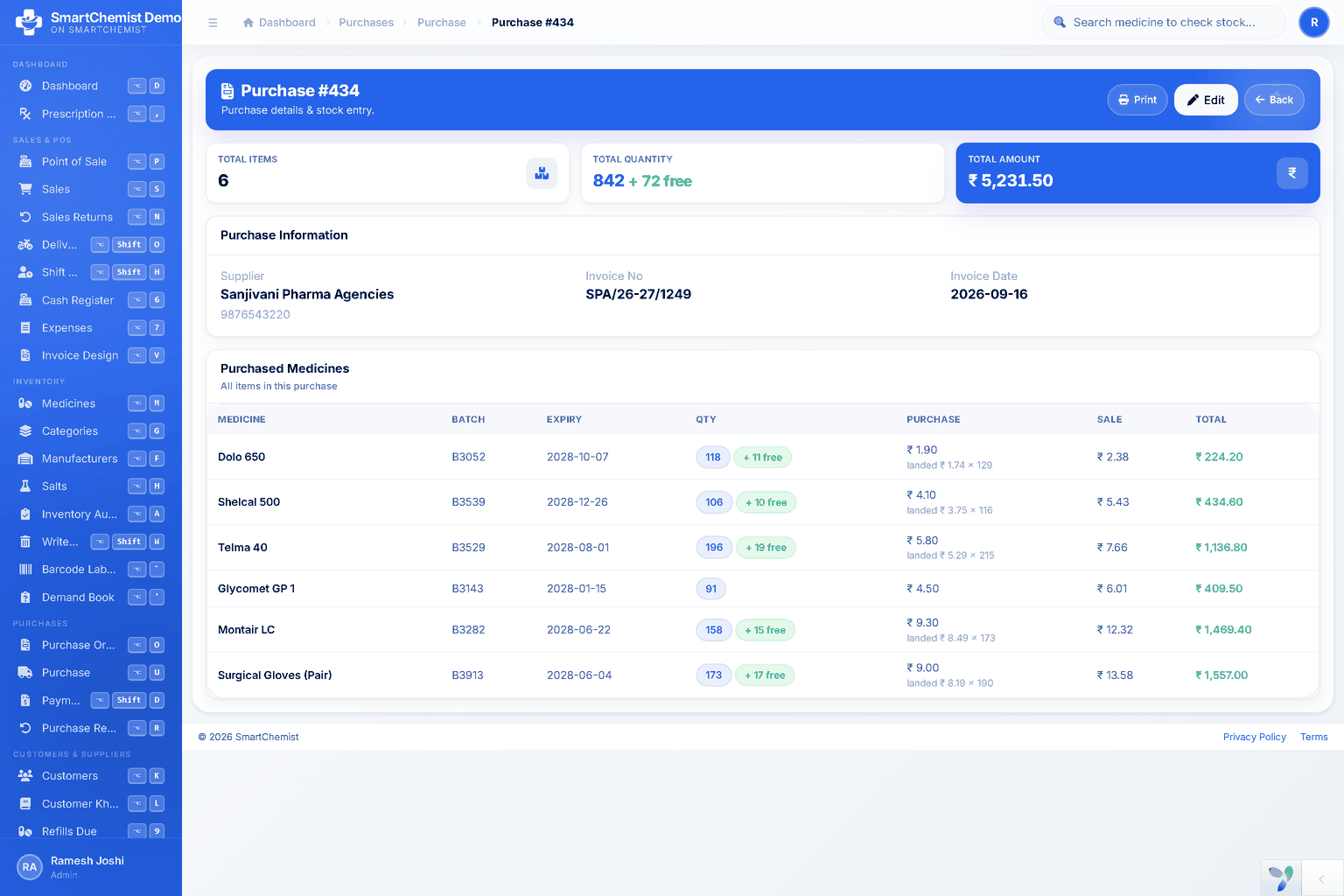
Every pharmacy knows the ritual. The shop shuts on a Sunday, the family comes in, somebody reads out names while somebody else ticks a printed list, and by evening there is a pile of paper that disagrees with the computer. On Monday morning the disagreements are either argued about or quietly ignored, and the register is edited until it matches - which defeats the purpose of having counted at all.
The counting is not the hard part. What to do with the differences is.
Count what is worth counting
A full count of every line in a medical store is a day's work and most of it is wasted: the medicines you sell every day are the ones whose figures drift, and the box of something you stocked once in 2024 is exactly where you left it.
So count in a scope you can finish in one sitting - everything in stock, or one category at a time. A count that gets finished tells you something; a count abandoned half way tells you nothing and has to be thrown away.
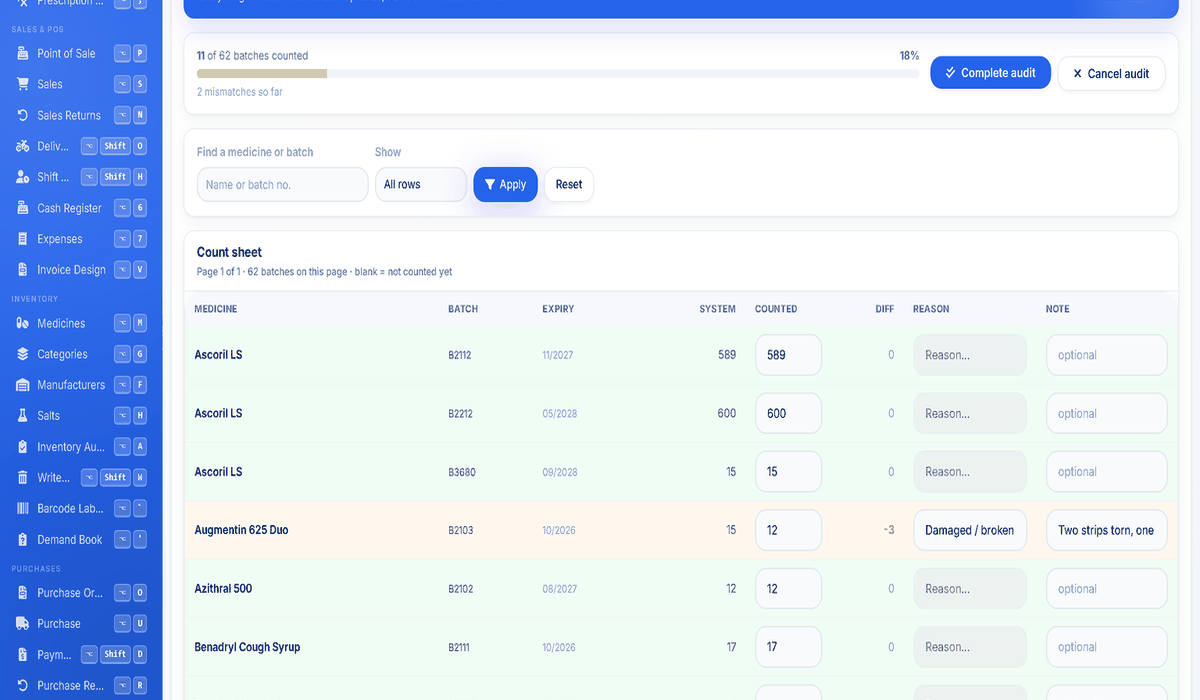
Two things about the sheet above matter more than they look. The first is that it counts batches, not medicines: the same syrup can sit on the shelf in three batches with three expiry dates, and "I have eleven" is not an answer a pharmacy can use. The second is that nothing is corrected while counting. The system quantity stays put, the counted figure goes in beside it, and the difference appears on its own.
The shop stays open while this happens. A bill raised mid-count is simply part of the picture when you finish.
Every difference gets a reason, while you are standing there
This is the step that turns a count into information. Three strips short is not a number - it is a question, and the only person who can answer it is the one holding the box.
Damaged. Expired and thrown. Sold and never billed. Keyed in wrong when it arrived. Taken. Each of those is a different problem with a different fix, and a week later nobody will remember which one it was.
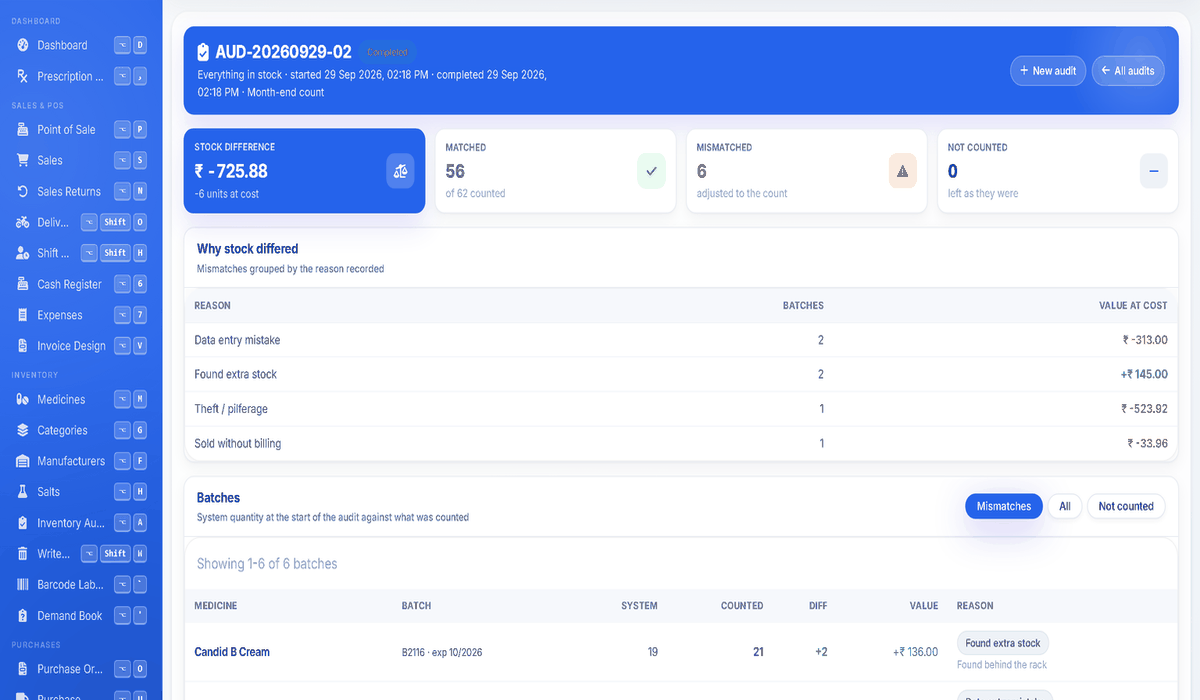
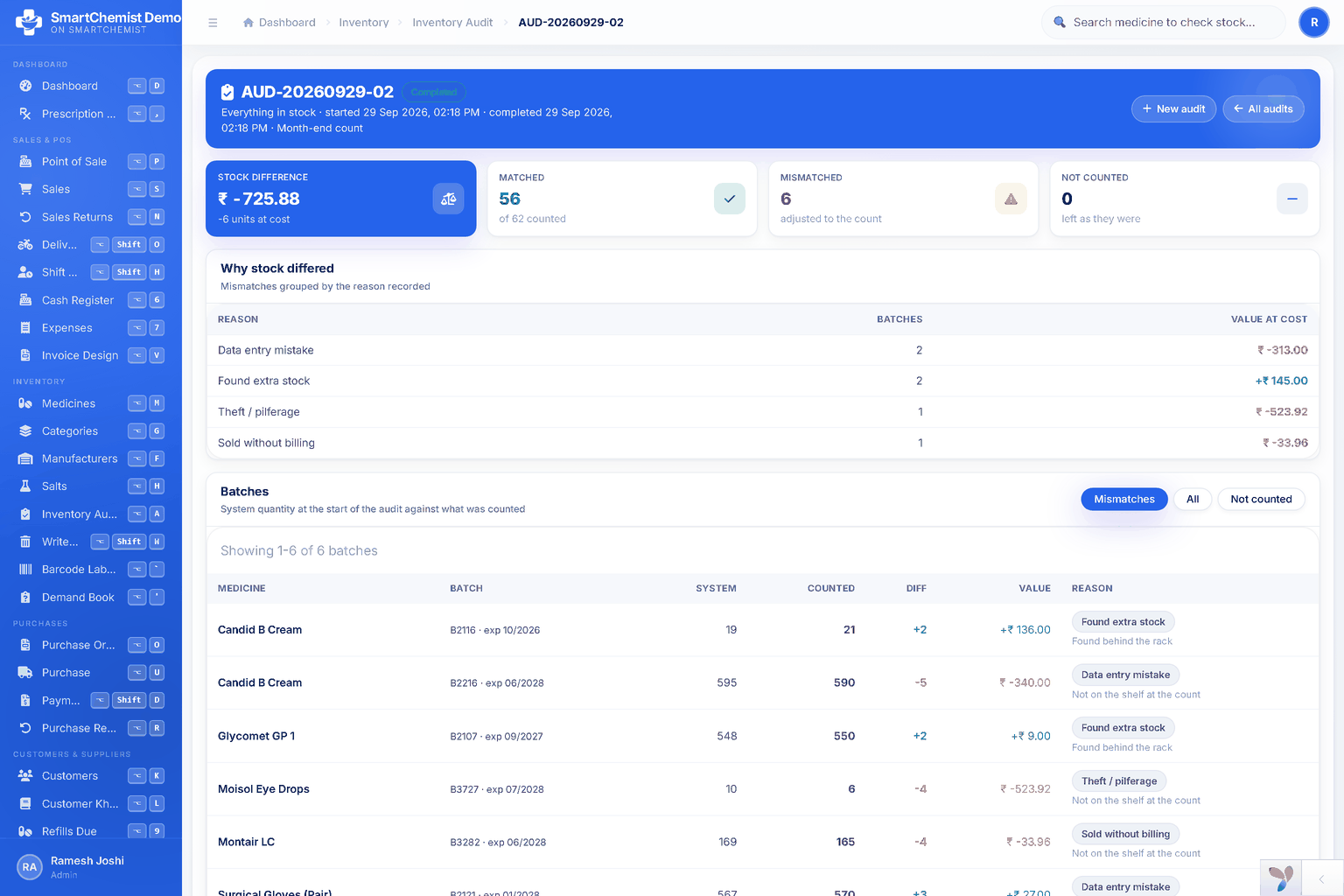
When the count is completed, the system quantities move to the counted ones in a single step - no line-by-line editing, nothing to forget. Here that was six batches out of sixty-two, and the shop is ₹725.88 lighter at cost than its records claimed.
Note what the reasons do to that number. Expired stock removed is a loss you already knew about. A data-entry mistake is not a loss at all - it is a correction. Sold without billing is money that came in and never reached the till. Theft is theft. One total, four different conversations.
What the differences mean over time
A single count tells you where you are. Several tell you what is happening.
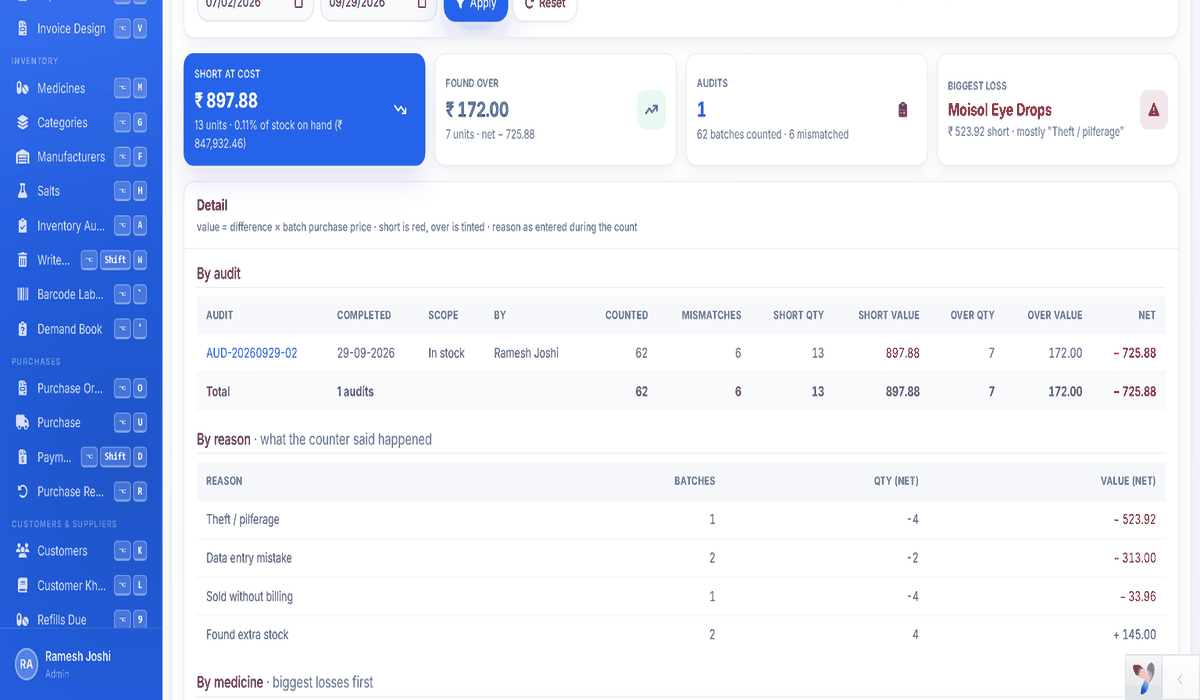
₹897.88 short against ₹847,932 of stock on hand is 0.11% - and knowing that number is worth more than the number itself, because now it can be compared. If it stays there, that is the ordinary friction of a busy counter. If it doubles next quarter, something has changed and you will know within weeks rather than at the next annual count.
The breakdown by medicine is where the specifics live. One line accounting for most of the shortage - here ₹523.92 of eye drops, recorded at the count as pilferage - is a different story from a small loss spread evenly across the shelf. The first has a cause somebody can name; the second is process.
A practical rhythm
- Monthly, one category. Rotate through them. Every line gets counted a few times a year without ever closing the shop for a day.
- The fast movers more often. The lines that sell every day are the ones that drift, and they are worth a count of their own.
- Count before you order, not after. A count is the only reliable basis for a purchase order, and the reorder list is honest for a few days afterwards.
- Never correct without a reason. A count with no reasons recorded is just a way of making the computer agree with the shelf, which is the one thing it should not be used for.
- Read the report when the count is done, not the next time somebody asks. It takes two minutes and it is the whole return on the work.
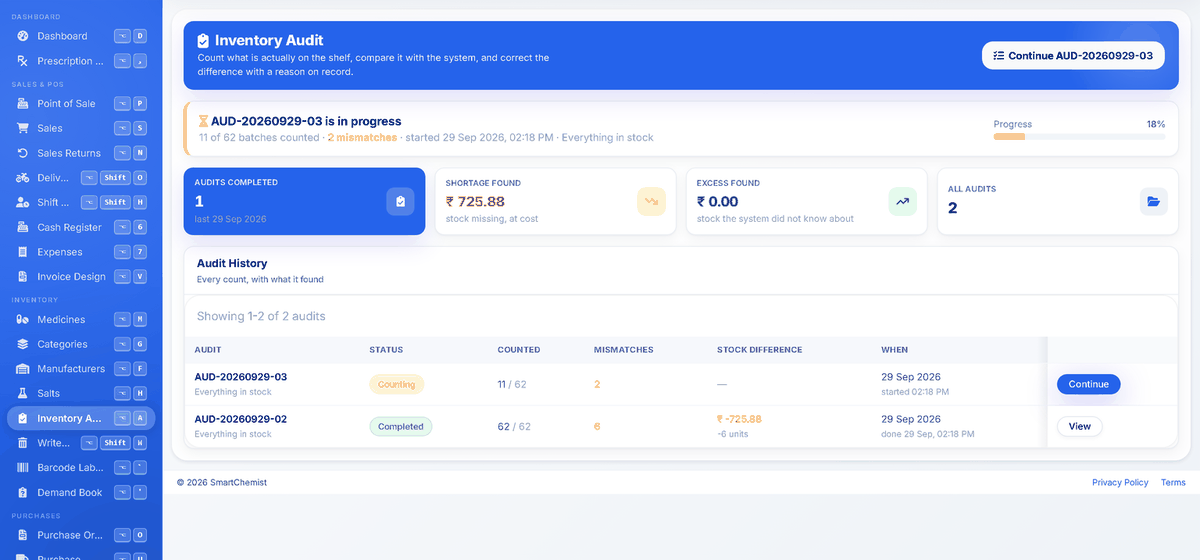
And keep them. A count you can produce a year later - what was counted, by whom, what differed and what they said about it - is the difference between a stock register somebody believes and one they argue with. It is also the record that answers an auditor's questions without a discussion.
None of this needs software to be true
You can do all of it with a printed list and a pen, and pharmacies did for decades. What the software removes is the part nobody enjoys: retyping the corrections, remembering which strip was damaged, adding up what the differences were worth, and comparing this count with the last one.
In SmartChemist that is the Inventory Audit: pick a scope, count on any device while the shop stays open, put a reason against each difference, complete it once and let the corrections apply themselves. The feature list has the rest of what sits around it - expiry, write-offs, purchase orders - and the free trial includes a count, so you can do your next one on it before deciding anything.