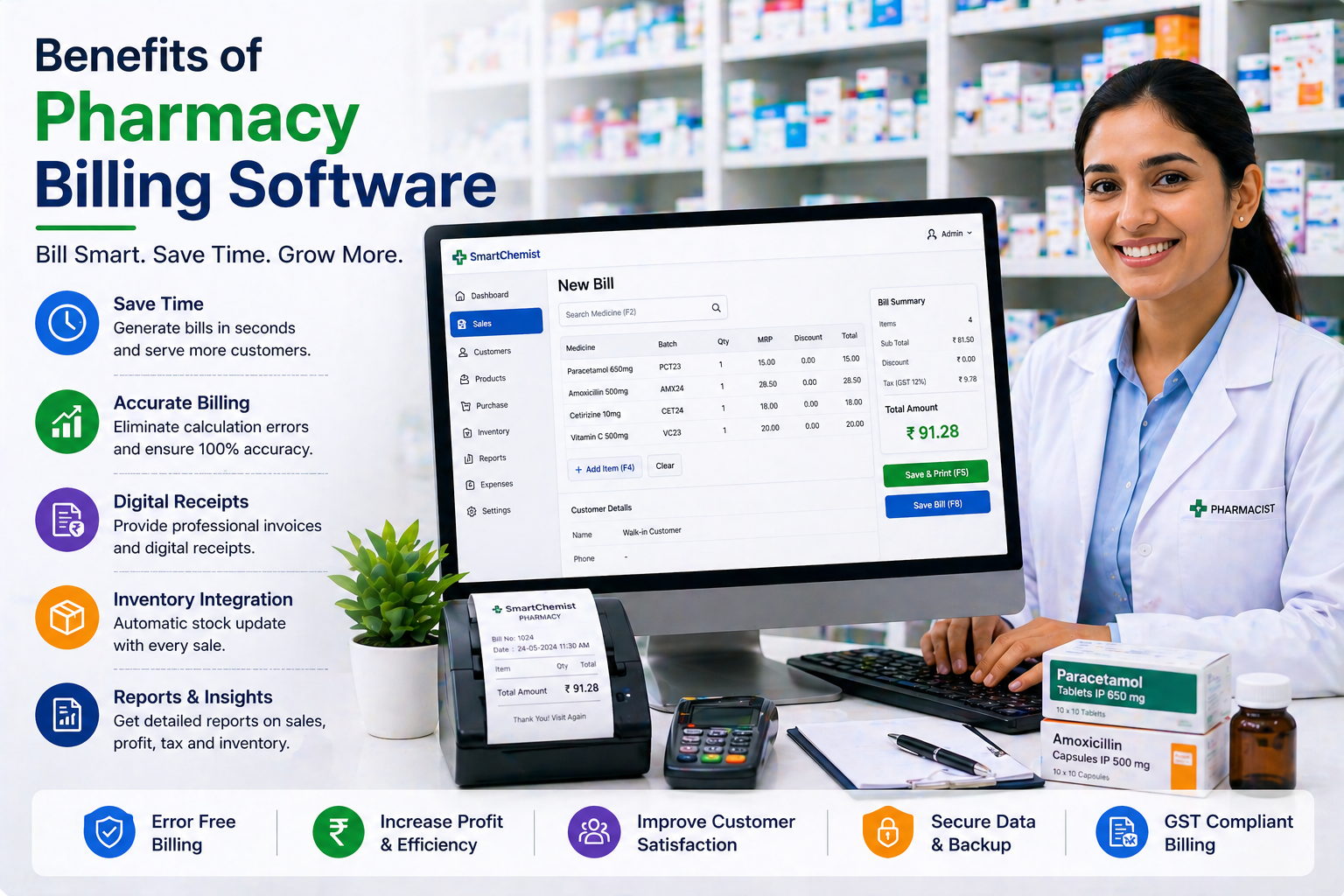
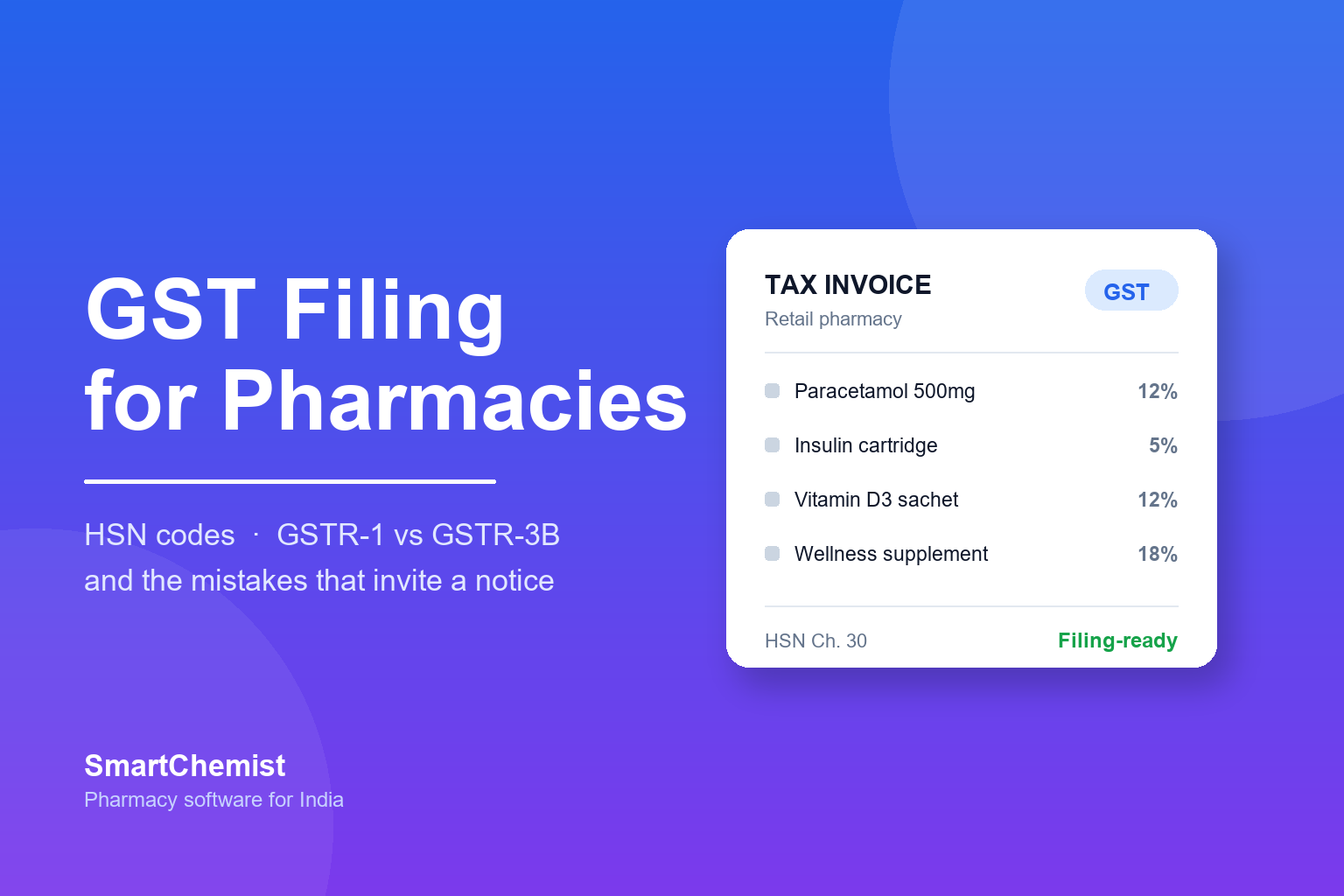
Every medical store in India charges GST on almost every bill it prints, yet GST is where most pharmacy owners lose time each month. Medicines do not all sit in one tax slab, a single counter sale can mix three of them, and the returns have to agree with what your billing software recorded. This guide covers what a pharmacy actually needs to get right.
Why GST Is Harder for a Medical Store
A grocery shop may sell everything at one rate. A pharmacy does not. A single invoice can carry a lifesaving drug, a common formulation and a wellness product, each taxed differently. If your billing software applies one blanket rate, every one of those bills is wrong, and the error repeats all month before anyone notices at filing time.
HSN Codes for Medicines
Pharmaceutical products sit under Chapter 30 of the HSN classification, which covers medicaments, bandages and similar goods. How many digits you must report depends on your turnover, so smaller stores report fewer digits than larger ones. The practical rule is simple: store the correct HSN against the medicine once, at the point you add it to your catalogue, and every future invoice inherits it. Fixing HSN codes bill by bill at year end is painful and error-prone.
GSTR-1 and GSTR-3B: What Goes Where
These two returns do different jobs, and mixing them up is a common source of trouble.
GSTR-1 reports your outward supplies, in detail. Sales to other businesses are reported invoice by invoice; ordinary counter sales to walk-in customers are reported in consolidated form rather than one line per bill.
GSTR-3B is the summary return where you declare your totals, claim input tax credit on your purchases from distributors, and pay what is due.
The figures in the two must reconcile. When they do not, it is usually because sales were edited after the fact, or a bill was raised outside the billing system and never recorded.
Four Mistakes That Invite a Notice
Handwritten bills that never reach the software. Anything billed on paper during a rush is invisible to your returns. Your stock and your sales stop agreeing, and that gap is exactly what an officer looks for.
Input credit claimed on the wrong purchases. Credit is claimed against your distributor invoices. If a purchase entry is missed, or entered twice, your credit figure will not survive scrutiny.
Wrong rate on a fast mover. One mis-tagged medicine that sells fifty times a day becomes fifty wrong invoices a day.
Credit notes not recorded. Returns and expiry replacements reduce your outward supply. If they only exist as a note in a register, your declared sales are overstated.
Keep Your Invoices Filing-Ready
The fix is not to work harder at filing time. It is to make the data correct as the bill is raised. SmartChemist stores the tax rate and HSN against each medicine, applies them automatically on every invoice, and keeps sales, purchases, returns and credit notes in one place, so your monthly figures are a report you run rather than a reconstruction you attempt.
GST rates and reporting requirements change from time to time. Treat this as a working guide and confirm the current rates and thresholds for your turnover with your accountant before filing.